Stand at the rope on a summer morning and you will see handlers, numbered arm bands, judges with clipboards and dogs sent out one at a time. Stand at the rope on a January afternoon and you will see the same things. The two events are not the same, and almost everything else in this record depends on knowing which one you are looking at.
The one-line answer
A field trial is judged on live unhandled game in the shooting field, and it counts. A gundog working test simulates a shooting day with dummies, no game is shot, and by the current regulation it confers no title. Everything else follows from that single difference.
What the regulation actually says
The Royal Kennel Club defines a field trial as a meeting held to assess the work of gundogs in the field, with dogs working on live unhandled game and where game may be shot. The same regulation forbids the use of any game that has been handled, dead or alive, anywhere in a field trial, with one exception: dead game may be used in the conduct of a water test. A gundog working test is defined separately, as a competition that artificially simulates shooting day conditions in order to assess working ability without game being shot.
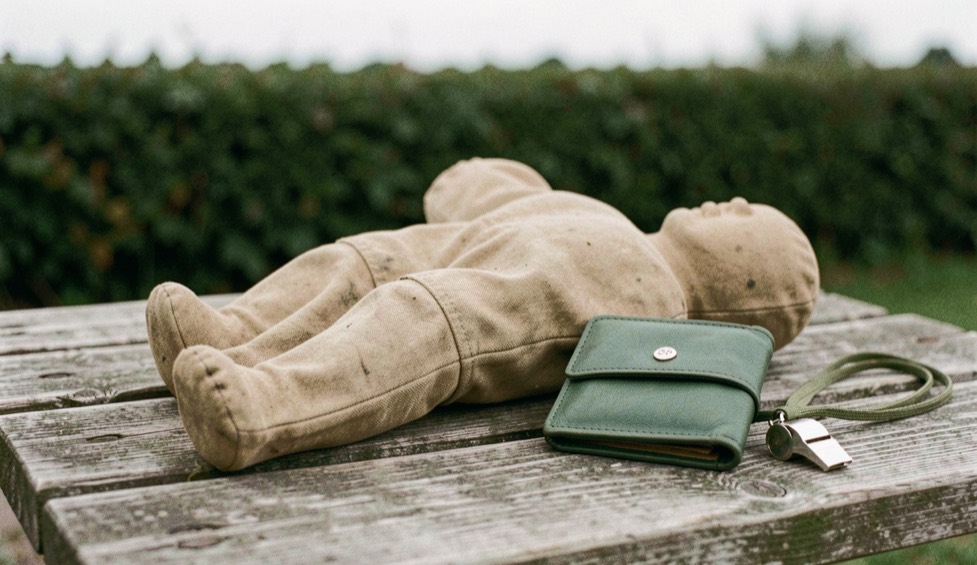
The dummy rule tightened recently. Since 2 February 2026 only dummies acceptable to the judges may be used for retrieves in a working test, and the same type of dummy must be used within a given exercise. The regulation now in force says nothing about cold game in a working test; the only place it allows dead game is the conduct of a water test at a field trial.
Why one counts and the other does not
Placings in a field trial open the Stud Book. First, second, third and fourth awards, together with Diplomas of Merit at a championship and Certificates of Merit elsewhere, qualify a dog for entry in the Royal Kennel Club Stud Book, and first places in open stakes are the currency of the Field Trial Champion title. Nothing of the sort exists for a working test: the current text says plainly that no titles are to be used for the winners of gundog working tests.
That does not make a working test result meaningless inside its own world. Winning a novice working test, or placing in the first three of an open one, moves a dog out of the novice class and gives it preference in future open tests. The result travels within working tests. It does not travel into field trials.
The practical differences a newcomer notices first
- Who can enter. Working tests are limited to members of the club running them. Field trial entries are open more widely, subject to the draw and the society’s own conditions.
- Who licenses them. A field trial is licensed individually, with the licence applied for at least thirty days ahead. A working test runs under an annual authorisation granted to a society, not under a licence per event.
- Which breeds. There are no working tests for pointers and setters. The working test regulation recognises three sub-groups only: retrievers including the Irish Water Spaniel, spaniels other than the Irish Water Spaniel, and the hunt, point and retrieve breeds.
- The judging vocabulary. A working test is normally marked on a points system, with individual tests typically marked out of twenty. A field trial produces placings and merit awards, not a total. That difference is worth a page of its own, and it has one.
- Puppy age. A puppy stake at a field trial is confined to dogs under two years old at the scheduled date. A puppy working test is confined to dogs under eighteen months on the day of the test, whatever awards they hold.
The calendar makes it obvious
The field trial year runs from 2 February to 1 February, and the working test year runs on exactly the same dates. Inside that year the two live at opposite ends. Most field trials fall in autumn and winter, during the shooting season, because they need shot game and the legal seasons allow it: red grouse from 12 August to 10 December in England, Wales and Scotland, partridge from 1 September and pheasant from 1 October, both to 1 February. Working tests fill the rest of the year with dummies, which is why a spring or summer event you stumble across is far more likely to be a test than a trial.
The exception is the pointer and setter circuit, which runs in April and May and again in August and September, and which is a field trial world with no working test equivalent at all.
How to tell in ten seconds at the ground
Look at what is being retrieved. Canvas and plastic mean a working test. Feather means a trial. Then look at the paper: a marked card with numbers out of twenty is a test, a judge writing notes with no running total is a trial. Then listen for the word stake, which belongs to field trials, against the word test. If there is a gun firing over a thrown dummy, note that the shot must always come before the dummy is thrown; that sequence is written into the working test regulation, and getting it the wrong way round is a common mistake in descriptions of these events.
A working test is judged on the day’s work, yet the dog in front of the judge is also read against a written description of its breed. What does the written breed standard actually fix? Some points, height and colour among them, are measurable at the ground with a tape or a scale. Others, such as movement or expression, are left to the judge’s eye. Where a breed reference is written in French, it is read alongside the British one, clause by clause.
Where this comes from
The definitions, the dummy rule, the titles rule, the stake and class ages, the year dates and the sub-groups are all in the Royal Kennel Club Field Trial Regulations including Gundog Working Tests, as at 2 February 2026, read on 5 September 2026. The seasonal picture and the membership rule for working tests are from the Royal Kennel Club page New to field trials, read the same day. The legal shooting dates are published by BASC. Note that the Kennel Club is now styled the Royal Kennel Club and that its older web addresses redirect.