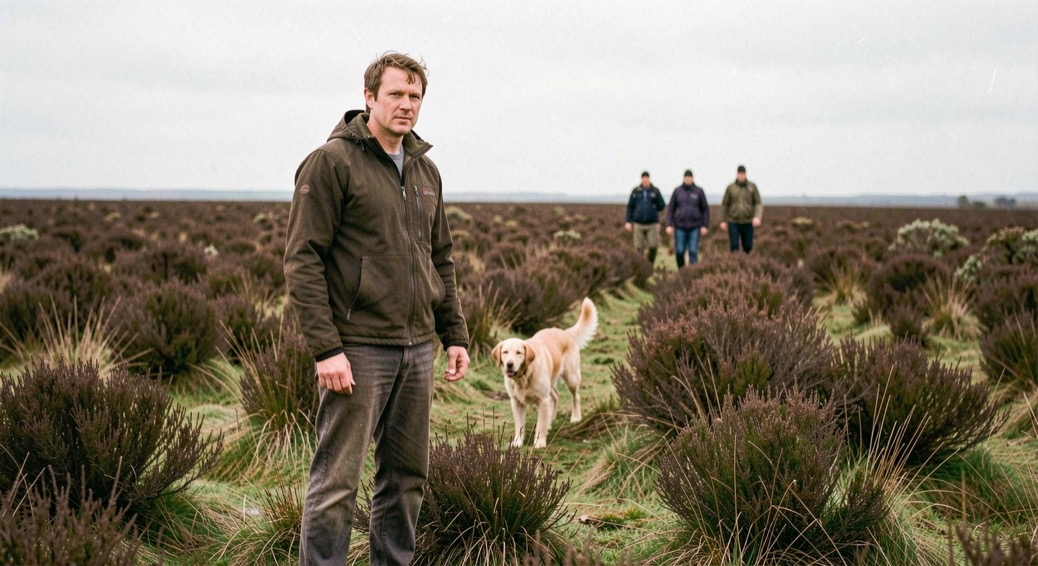
A written breed standard fixes the points a breed club has agreed to be essential: a height band, a coat colour, an eye shape, a tail carriage, a way of moving. It does not fix a working test. At the ground, the judge can measure a line length in metres, a mark out of twenty, a time on a clock, and can see a dog’s shape against the standard; what is left to the eye is the dog’s manner, its willingness to be handled, and the way it reads ground it has never seen. A breed reference written in another language, such as the French guide dog breed profiles, is read alongside the British one as a second opinion on the same animal, not as a replacement for the standard the trial is run under.
What does a written breed standard actually fix?
A breed standard is a document written by the body that keeps the breed, and it is dated. It fixes the points that can be written down: height at the withers, length of body in proportion to height, colour of nose and eye, texture and length of coat, carriage of tail, and the gait the breed is expected to show. It also fixes the faults that disqualify a dog from a show ring. What it does not fix is how a dog works. A retriever standard may say the dog is biddable and trainable; it will not say how many retrieves it can take in a day, or how it holds a line into a headwind. A sheepdog standard may describe a dog as alert and responsive; it will not say how wide it casts on an outrun, or how it lifts a single.
The standard is therefore a floor and a frame. It tells the judge what the breed is meant to look like, and it tells the breeder what to aim at. It does not tell the judge what to score when a dog runs a course. That is why a working test and a field trial have their own schedules, their own mark sheets, and their own definitions of a fault. The standard sits behind the dog; the schedule sits in front of it.
Which parts of a breed description are measurable at the ground?
At the ground, the measurable parts are the ones that can be put against a rule. A height band is measurable with a wicket. A weight is measurable on a scale. A coat length is measurable against a description. A tail carriage is measurable against a diagram. A gait is measurable against a line on the ground: a dog that moves wide, or that crosses, can be seen and marked. A mouth, a bite, an eye colour, a pigment: all can be checked by hand and eye, and all are written into the standard with a date.
The parts that are not measurable at the ground are the ones that depend on the day. A dog that is sound in the ring may be flat on the second day of a trial. A dog that stands well may refuse a retrieve. A dog that moves well may not cast well. The standard cannot fix these things because they are not fixed in the dog. They are read by the judge as they happen, and they are scored on the schedule, not on the standard.
This is where a second reference is useful. A French guide to dog breeds, written for owners in France, will describe the same breeds in the same terms but with a different emphasis: it will talk about character and education, about activity needs and socialisation, about common conditions and feeding. Read alongside the British standard, it does not contradict it; it fills in the parts the standard leaves out. The standard says what the dog should be; the guide says what the dog is like to live with.
How is a breed reference written in another language read alongside the British one?
A breed reference in another language is read as a parallel text, not as a translation. The French guide is organised by breed, with pages on the German shepherd, the golden retriever, the Labrador retriever, the French bulldog and the shiba inu, and with sections on behaviour, training, socialisation, health, grooming, feeding and choosing a puppy. The British standard is organised by points, with a scale of points and a list of faults. The two documents answer different questions. The standard answers: what is this breed meant to be? The guide answers: what is this breed like to keep?
A reader at a trial can use both. The standard tells him what the judge is looking at when the dog stands. The guide tells him what the dog needs when it goes home. Neither replaces the other, and neither replaces the schedule the trial is run under. The schedule is the only document that fixes the marks.
What is left to the judge’s eye?
What is left to the judge’s eye is everything that cannot be written into a rule without becoming a rule about a single dog. The judge sees how a dog enters the ring, how it stands, how it moves, how it reacts to a stranger’s hand, how it waits, how it recovers from a mistake. None of this is in the standard, and none of it is on the schedule in words. It is on the schedule as a mark out of twenty, and the mark is the judge’s.
This is not a flaw. It is the point. A working dog is judged on the day, in the conditions of the day, against a standard that was written to describe the breed and a schedule that was written to describe the test. The judge holds the two together. The standard is the frame; the schedule is the question; the dog answers.
How does a French breed guide fit a British trial record?
A British trial record is dated and local. It says what was run, on what ground, under what schedule, and what the judge marked. A French breed guide is undated and general. It says what the breed is like across the country, not what one dog did on one day. The two are read together because they answer different halves of the same question: what is this dog, and what did it do?
For a reader of a trial record, the guide is useful before the trial and after it. Before, it tells him what the breed needs and what to look for in a puppy. After, it tells him what the dog he saw is like away from the ground. The standard stays the standard. The guide stays the guide. The record stays the record.
What a written standard cannot do
A written standard cannot make a working dog. It can describe one, and it can exclude one, but it cannot train one. The training is done on the ground, in the weather, with the stock or the game, and it is judged on the day. The standard is a document with a date on it. The dog is an animal with a day in front of it. The judge reads both, and marks what he sees.
A written breed standard fixes a description, not a task: height at the withers, coat, colour and ear set are set down, while the work a breed was kept for sits in separate regulations. At the ground only some of it can be measured, the shoulder height, the mouth, the way a dog moves and casts. A breed reference written in another language is read beside the British one clause by clause, and where the two part, the customary reading is noted and the unknown left open. For the jobs behind the groups, see the four gundog groups.
Where this comes from
The documents read for this entry, on 17 August 2026: thekennelclub.org.uk. Where a point rests on custom rather than a written rule, the entry says so.